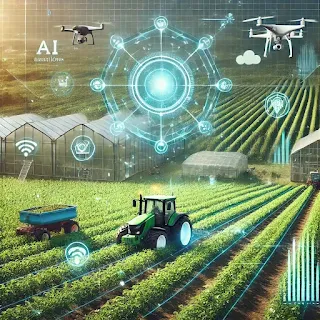
Showing posts with label Artificial Intelligence in Farming. Show all posts

How AI in Agriculture Improves Crop Yields and Efficiency


How AI in Agriculture Improves Crop Yields and Efficiency

Introduction

The global agricultural industry is facing significant challenges, including climate change, soil degradation, water scarcity, and a growing demand for food. To address these issues, farmers and agribusinesses are turning to Artificial Intelligence (AI) to revolutionize farming techniques and increase productivity. AI-driven solutions in agriculture enhance decision-making, optimize resource allocation, and improve crop yields and efficiency.

This article explores how AI-powered innovations are transforming farming operations and helping farmers achieve sustainable and profitable agricultural practices.

The Role of AI in Agriculture

AI is reshaping agriculture by automating processes, analyzing data, and providing real-time insights. By integrating AI with technologies such as machine learning, computer vision, and IoT (Internet of Things), farmers can make informed decisions that maximize productivity and minimize resource waste.

Key AI Technologies in Agriculture:

  • Machine Learning (ML): Analyzes vast amounts of agricultural data to improve decision-making.

  • Computer Vision: Helps detect plant diseases, pests, and crop health issues.

  • Robotics and Automation: AI-powered machines assist in planting, harvesting, and irrigation.

  • Predictive Analytics: Provides insights on weather patterns, soil conditions, and yield forecasts.

How AI Improves Crop Yields

1. Precision Farming

Precision farming uses AI to optimize agricultural practices by analyzing real-time data from sensors, drones, and satellites. AI algorithms assess soil conditions, moisture levels, and nutrient availability, allowing farmers to:

  • Apply fertilizers and pesticides in precise amounts.

  • Reduce waste and environmental impact.

  • Enhance crop health and yield quality.

Example: John Deere's AI-powered Precision Ag Technology enables farmers to make data-driven decisions for better crop management.

2. AI-Powered Drones for Crop Monitoring

AI-integrated drones play a crucial role in modern agriculture by capturing high-resolution images of farmland. These images help in:

  • Identifying early signs of diseases and pest infestations.

  • Assessing crop health and detecting stress levels.

  • Optimizing irrigation and fertilizer distribution.

Example: DJI Agras drones use AI to monitor crops and apply pesticides more efficiently, reducing chemical waste and increasing productivity.

3. Smart Irrigation and Water Management

Water scarcity is a major concern in agriculture. AI-driven irrigation systems optimize water usage by analyzing soil moisture data, weather forecasts, and crop water needs. Smart irrigation technology helps:

  • Reduce water wastage.

  • Improve soil health by preventing overwatering.

  • Increase yield efficiency through precise water application.

Example: Netafim’s AI-powered irrigation solutions help farmers conserve water while ensuring optimal crop growth.

4. AI in Soil Health Analysis

Soil quality directly affects crop yield. AI-powered soil analysis tools assess:

  • Nutrient content and pH levels.

  • Soil structure and moisture retention capacity.

  • Recommendations for improving soil fertility.

Example: CropX AI-based soil sensors provide real-time data on soil health, enabling farmers to take corrective measures for better yields.

5. AI-Powered Pest and Disease Detection

AI algorithms use image recognition and machine learning to detect plant diseases and pest infestations before they cause major damage. AI-driven systems:

  • Identify pathogens and suggest treatments.

  • Reduce reliance on chemical pesticides.

  • Minimize crop losses by providing early warnings.

Example: The Plantix AI app helps farmers diagnose plant diseases using smartphone images and offers tailored solutions.

6. AI-Driven Automated Harvesting

AI-powered harvesting robots automate the picking of fruits and vegetables, improving efficiency and reducing labor dependency. These robots:

  • Identify ripe produce with computer vision.

  • Harvest crops without damaging them.

  • Operate 24/7, increasing productivity.

Example: Agrobot and FFRobotics develop robotic harvesters that enhance efficiency and reduce post-harvest losses.

7. Predictive Analytics for Yield Forecasting

AI-powered predictive analytics analyze historical and real-time farming data to forecast:

  • Crop yield potential.

  • Weather conditions and climate impact.

  • Market demand and pricing trends.

Example: IBM Watson Decision Platform for Agriculture helps farmers optimize their planting and harvesting schedules based on AI-driven predictions.

How AI Improves Efficiency in Agriculture

1. AI in Supply Chain Management

AI optimizes agricultural supply chains by:

  • Reducing food wastage with demand forecasting.

  • Automating inventory management.

  • Enhancing logistics and distribution.

Example: Cargill’s AI-driven supply chain solutions ensure efficient food production and distribution.

2. AI-Enabled Smart Greenhouses

AI regulates greenhouse environments by adjusting temperature, humidity, and light conditions for maximum plant growth. AI-powered greenhouses:

  • Increase yield by providing ideal growing conditions.

  • Reduce reliance on manual monitoring.

  • Enhance energy efficiency in controlled farming.

Example: iUNU’s LUNA AI system uses computer vision to monitor plant growth in smart greenhouses.

3. AI in Livestock Management

AI plays a key role in improving livestock farming efficiency by monitoring:

  • Animal health and detecting early signs of disease.

  • Feeding schedules for optimal nutrition.

  • Breeding programs to enhance livestock productivity.

Example: Connecterra’s AI-powered Ida platform tracks dairy cow behavior and health for improved milk production.

4. AI-Powered Autonomous Tractors and Farm Equipment

AI-driven autonomous machinery reduces labor costs and increases efficiency by automating farming tasks such as:

  • Seeding and planting crops.

  • Weeding and soil cultivation.

  • Harvesting and post-harvest processing.

Example: John Deere’s AI-powered self-driving tractors optimize farm operations with minimal human intervention.

The Future of AI in Agriculture

AI’s role in agriculture is expected to expand with advancements in technology. Future AI-driven innovations include:

  • Blockchain Integration: AI and blockchain will enhance supply chain transparency and traceability.

  • AI-Powered Crop Genetics: Machine learning will be used to develop disease-resistant, high-yield crop varieties.

  • Robotic Pollinators: AI-powered drones will assist in pollination to combat bee population decline.

  • AI in Vertical Farming: AI-driven indoor farming will improve food production in urban areas.

  • Climate-Smart AI Solutions: AI will help farmers adapt to changing climate conditions and reduce environmental impact.

Conclusion

AI in agriculture is transforming the way farmers grow crops, manage resources, and increase productivity. By integrating AI-powered solutions such as precision farming, predictive analytics, smart irrigation, and autonomous machinery, farmers can improve crop yields and efficiency while reducing costs and environmental impact.

As AI technology continues to evolve, its potential in agriculture will only grow, helping to create a more sustainable and food-secure future.

Are you excited about AI in agriculture? Share your thoughts in the comments below!

AI in Agriculture: Benefits, Challenges, and Future Trends


AI in Agriculture: Benefits, Challenges, and Future Trends

Introduction

Artificial Intelligence (AI) is transforming the agricultural sector, driving efficiency, sustainability, and productivity. With the increasing global population and rising demand for food, AI-driven solutions are essential in addressing challenges such as climate change, resource management, and labor shortages. From precision farming to AI-powered drones and robotics, AI is reshaping modern agriculture, helping farmers make data-driven decisions and optimize their operations.

This blog explores the benefits, challenges, and future trends of AI in agriculture, highlighting its impact on food production and sustainability.

Benefits of AI in Agriculture

AI offers numerous advantages to the agricultural industry, improving productivity, reducing costs, and promoting sustainable farming practices.

1. Precision Farming and Smart Crop Management

AI-powered precision farming enables farmers to optimize crop management by collecting real-time data through sensors, drones, and satellite imagery. AI algorithms analyze this data to provide actionable insights, helping farmers:

  • Optimize water and fertilizer usage
  • Detect plant diseases and pest infestations early
  • Improve soil health and crop rotation

Tools like John Deere’s AI-powered tractors and IBM’s Watson Decision Platform for Agriculture use AI to enhance crop management and maximize yield.

2. AI-Powered Drones and Robotics

Drones and robotics equipped with AI and machine learning improve efficiency in farming operations. AI-powered drones help in:

  • Crop monitoring and health assessment
  • Pest and disease detection
  • Smart spraying of fertilizers and pesticides

AI-driven robots like Agrobot and FFRobotics are also automating harvesting processes, reducing labor costs, and improving efficiency.

3. Predictive Analytics for Weather and Market Forecasting

AI models analyze historical climate data and real-time weather conditions to provide accurate weather predictions. AI-powered market forecasting tools help farmers:

  • Determine the best time to plant and harvest crops
  • Predict demand and market trends
  • Optimize supply chain operations

Platforms like Microsoft AI for Earth and aWhere use AI-driven predictive analytics to support climate-smart agriculture.

4. Smart Irrigation and Water Management

AI-powered irrigation systems optimize water usage by analyzing soil moisture, weather forecasts, and crop requirements. Netafim’s AI-driven irrigation systems help farmers conserve water and improve crop yield by using real-time data to adjust water distribution efficiently.

5. AI in Livestock Management

AI applications in animal farming monitor livestock health, nutrition, and behavior, ensuring early disease detection and optimal breeding conditions. AI-based systems like Connecterra’s Ida and Cainthus use computer vision to track animal movement, detect health issues, and improve overall livestock productivity.

Challenges of AI Adoption in Agriculture

Despite its numerous benefits, AI adoption in agriculture faces several challenges.

1. High Implementation Costs

AI-powered farming equipment, drones, and robotics require significant investment, making it difficult for small-scale farmers to afford them. The high costs of AI development, deployment, and maintenance also hinder widespread adoption.

2. Limited Technical Knowledge and Training

Many farmers lack the technical expertise required to operate AI-based tools effectively. Training and awareness programs are essential to bridge the knowledge gap and encourage AI adoption in agriculture.

3. Data Privacy and Security Concerns

AI relies on vast amounts of data for accurate predictions and decision-making. However, concerns about data privacy, ownership, and security pose challenges in AI implementation. Ensuring secure data storage and ethical AI usage is crucial for the industry.

4. Connectivity and Infrastructure Issues

Many rural areas lack reliable internet connectivity and digital infrastructure, limiting the effectiveness of AI-powered solutions. Governments and private organizations need to invest in improving connectivity to support AI-driven agriculture.

5. Ethical and Environmental Concerns

The use of AI in agriculture raises ethical concerns, such as potential job displacement and dependency on technology. Additionally, AI-driven farming practices must align with environmental sustainability goals to prevent excessive resource depletion and pollution.

Future Trends in AI and Agriculture

AI will continue to shape the future of agriculture, introducing new technologies and innovative solutions to enhance food production and sustainability. Below are some key trends expected in AI-driven agriculture.

1. AI-Enabled Smart Greenhouses

AI-powered smart greenhouses will optimize indoor farming by using automated climate control, real-time monitoring, and predictive analytics. These greenhouses will enhance crop growth and reduce reliance on natural weather conditions.

2. Blockchain Integration with AI

Combining AI with blockchain technology will improve supply chain transparency, enabling secure and traceable food production. AI-driven blockchain systems will help track produce from farm to consumer, ensuring food safety and authenticity.

3. AI-Driven Genetic Crop Engineering

AI-powered genetic research will contribute to the development of disease-resistant and high-yield crop varieties. Machine learning models will analyze genetic data to improve plant breeding and enhance agricultural productivity.

4. Autonomous AI-Driven Farming Machines

AI-powered autonomous tractors, seeding robots, and harvesting machines will revolutionize large-scale farming operations, reducing labor dependency and increasing efficiency.

5. AI in Vertical Farming and Urban Agriculture

AI-driven vertical farming will optimize food production in urban areas, reducing the need for vast agricultural land. AI-powered hydroponic and aeroponic systems will enhance food security while minimizing environmental impact.

6. Climate-Smart AI Agriculture

AI will play a vital role in climate-smart agriculture by developing solutions that adapt to changing climate conditions. AI-driven predictive analytics will help farmers mitigate risks associated with climate change and natural disasters.

Conclusion

AI is revolutionizing agriculture by improving efficiency, increasing crop yields, and promoting sustainability. While challenges such as high costs, technical barriers, and data privacy concerns remain, the potential of AI in agriculture is immense. Future advancements in AI-driven smart farming, automation, and climate-resilient agriculture will ensure a more food-secure world.

As AI technology continues to evolve, collaboration between governments, agritech companies, and farmers will be essential in maximizing its benefits and addressing challenges effectively.

Are you excited about the future of AI in agriculture? Share your thoughts in the comments below!

Top 10 Applications of AI in Agriculture in 2025


Top 10 Applications of AI in Agriculture in 2025

Introduction

The agricultural industry is undergoing a technological revolution, with Artificial Intelligence (AI) playing a crucial role in increasing efficiency, productivity, and sustainability. As global food demand rises, AI-driven solutions are transforming farming by automating processes, improving decision-making, and optimizing resource usage. In 2025, AI is set to redefine modern agriculture in ways we never imagined.

In this blog, we will explore the top 10 applications of AI in agriculture and how they are revolutionizing farming practices worldwide.

1. Precision Farming

Precision farming uses AI-powered technologies to analyze data from various sources like drones, sensors, and satellites to optimize crop management. AI-driven decision-making helps farmers determine:

  • The best time to plant and harvest crops

  • The right amount of water and fertilizers

  • Soil health conditions for better yield

AI-based tools such as John Deere’s Precision Ag Technology use machine learning to enhance farming accuracy and reduce resource wastage.

2. AI-Powered Drones for Crop Monitoring

Drones equipped with AI and computer vision technology are revolutionizing crop monitoring. AI-powered agricultural drones can:

  • Capture real-time aerial images of farmland

  • Detect plant diseases, pest infestations, and nutrient deficiencies

  • Optimize irrigation and spraying of pesticides

Tools like DJI Agras and Sentera use AI to improve agricultural productivity and minimize crop losses.

3. Automated Irrigation Systems

Water conservation is a significant challenge in agriculture. AI-driven smart irrigation systems analyze weather patterns, soil moisture levels, and plant needs to optimize water usage. NetBeat by Netafim is an AI-powered irrigation system that helps farmers make real-time decisions to reduce water wastage and increase efficiency.

4. AI in Pest and Disease Detection

AI applications in pest and disease detection help farmers take proactive measures before major outbreaks occur. AI-based platforms like Plantix and PEAT use image recognition to identify plant diseases and recommend treatment solutions. Additionally, AI-powered robotic systems can detect and eliminate pests using minimal pesticide application.

5. AI-Driven Robotics for Harvesting

Labor shortages in agriculture have led to the rise of AI-driven robotic harvesters. AI-powered robots can:

  • Identify ripe fruits and vegetables

  • Harvest crops without damaging them

  • Operate 24/7 to increase efficiency

Companies like FFRobotics and Agrobot are developing autonomous harvesting robots that reduce dependence on human labor while increasing yield.

6. AI in Weather Forecasting and Climate Analysis

AI-powered weather forecasting tools help farmers prepare for unpredictable climate changes. By analyzing historical data and real-time weather patterns, AI provides accurate climate predictions. IBM Watson Decision Platform for Agriculture is an AI-driven solution that helps farmers plan agricultural activities based on precise weather insights.

7. AI-Powered Soil Analysis and Crop Selection

AI-based soil analysis tools help farmers choose the best crops for their land. AI-enabled sensors analyze soil composition, moisture levels, and nutrient content, enabling informed decision-making. Companies like Trace Genomics and CropX use AI to assess soil health and suggest optimal crop rotation strategies for better yields.

8. AI in Supply Chain Optimization

AI is playing a vital role in optimizing the agricultural supply chain by:

  • Predicting market demand and price fluctuations

  • Reducing food wastage by improving logistics and distribution

  • Automating inventory management for agribusinesses

AI-powered platforms like Cargill and AgriDigital use predictive analytics to improve food supply chain efficiency and profitability.

9. AI in Livestock Management

AI is transforming livestock farming by monitoring animal health, optimizing feeding schedules, and improving breeding techniques. Ida by Connecterra is an AI-powered dairy management system that tracks cow behavior and provides insights on milk production, health issues, and reproductive cycles.

10. AI-Enabled Smart Greenhouses

AI-powered smart greenhouses regulate environmental conditions such as temperature, humidity, and light levels to maximize crop growth. AI-driven systems like Autogrow and iUNU’s LUNA use machine learning algorithms to optimize greenhouse environments, leading to increased agricultural productivity.

The Future of AI in Agriculture

The future of AI in agriculture looks promising, with innovations like:

  • Blockchain integration for secure food traceability

  • AI-powered autonomous tractors and farm machinery

  • AI-driven genetic research for high-yield crop varieties

  • Sustainable AI-based farming techniques for climate resilience

Conclusion

AI is revolutionizing agriculture in 2025 by making farming smarter, more efficient, and sustainable. From precision farming and AI-powered drones to smart irrigation and AI-driven robotics, AI applications are helping farmers increase productivity while conserving resources. As AI technology continues to evolve, its impact on agriculture will only grow, ensuring food security for future generations.

Are you excited about the role of AI in farming? Let us know your thoughts in the comments below!

How AI in Agriculture Is Revolutionizing Farming


How AI in Agriculture Is Revolutionizing Farming

Introduction

The agriculture industry is undergoing a massive transformation, thanks to Artificial Intelligence (AI). With the increasing global population and the rising demand for food production, traditional farming methods are struggling to keep up. AI-driven solutions are providing farmers with smart technologies that enhance productivity, reduce resource wastage, and ensure sustainable farming practices.

In this blog, we will explore how AI in agriculture is revolutionizing farming, improving efficiency, and shaping the future of food production.

The Role of AI in Agriculture

AI is transforming agriculture by integrating advanced technologies such as machine learning, computer vision, robotics, and predictive analytics. These innovations help farmers make better decisions, optimize resource use, and increase crop yield. Below are some key areas where AI is making a significant impact in agriculture.

1. Precision Farming

Precision farming, also known as precision agriculture, leverages AI-driven data analysis to help farmers manage crops and livestock more efficiently. AI-powered tools collect real-time data through sensors, drones, and satellites, allowing farmers to make data-driven decisions on irrigation, fertilization, and pest control.

  • AI-based soil analysis helps determine the right amount of nutrients needed for crops.

  • Smart irrigation systems optimize water usage, preventing overwatering and water wastage.

  • Machine learning models analyze historical data to predict weather conditions and crop performance.

2. AI-Powered Drones and Robotics

Agricultural drones equipped with AI and computer vision help farmers monitor crops, detect diseases, and assess soil health. AI-driven robotic systems are also being used for planting, harvesting, and weeding, reducing the dependency on manual labor and increasing efficiency.

  • Drones provide high-resolution imagery to detect crop stress, nutrient deficiencies, and pest infestations.

  • AI-powered robots automate the process of picking fruits and vegetables, improving harvesting efficiency.

  • Autonomous tractors use AI navigation to plant seeds and apply fertilizers with precision.

3. Pest and Disease Detection

One of the biggest challenges in agriculture is crop loss due to pests and diseases. AI-driven applications use image recognition and deep learning algorithms to detect early signs of infestations and plant diseases.

  • AI-powered tools like Plantix and Agrio analyze images of crops and diagnose diseases instantly.

  • Machine learning models predict pest outbreaks based on historical weather and environmental data.

  • Smart spraying systems target affected areas with precision, reducing pesticide usage and environmental impact.

4. Smart Irrigation and Water Management

AI in agriculture is optimizing water usage through smart irrigation systems that analyze weather forecasts, soil moisture levels, and crop water needs.

  • AI-driven irrigation controllers adjust water flow based on real-time conditions, reducing water wastage.

  • Predictive analytics help farmers anticipate droughts and take preventive measures.

  • AI-enabled IoT sensors monitor soil health and provide real-time insights to farmers.

5. AI-Driven Market Forecasting

AI is helping farmers make better market decisions by analyzing trends in supply and demand, weather patterns, and economic factors.

  • Predictive analytics provide farmers with insights on the best time to plant and harvest crops.

  • AI-driven platforms help farmers connect with buyers and optimize pricing strategies.

  • Market intelligence tools reduce the risk of overproduction and crop wastage.

Real-World Applications of AI in Agriculture

Several companies and organizations are already using AI to enhance farming efficiency. Here are some real-world examples of AI in agriculture:

  • John Deere’s AI Tractors: These autonomous tractors use AI-powered sensors and GPS for precision farming.

  • IBM Watson Decision Platform for Agriculture: This AI-driven platform provides farmers with insights on weather conditions, soil health, and crop management.

  • Microsoft AI for Earth Initiative: Microsoft is partnering with agricultural businesses to develop AI-powered tools for sustainable farming.

  • Blue River Technology’s See & Spray System: This AI-based technology detects weeds and applies herbicides only where necessary, reducing chemical usage.

  • AI-Powered Vertical Farming: AI optimizes lighting, temperature, and humidity in vertical farms, maximizing crop growth in limited spaces.

The Future of AI in Agriculture

The future of AI in agriculture looks promising, with continuous advancements expected in the following areas:

  • AI-Enabled Smart Greenhouses: AI-driven climate control systems will optimize indoor farming conditions.

  • Blockchain and AI Integration: Combining AI with blockchain technology will enhance supply chain transparency and traceability.

  • AI-Powered Soil Health Monitoring: AI will provide deeper insights into soil conditions, helping farmers improve crop rotation strategies.

  • Autonomous Farming Machines: More AI-driven robots and autonomous tractors will be used for large-scale farming operations.

  • Genetic Engineering and AI: AI-powered genetic research will lead to the development of disease-resistant and high-yielding crop varieties.

Challenges of AI Adoption in Agriculture

Despite its numerous benefits, the adoption of AI in agriculture faces several challenges:

  • High Initial Costs: AI-powered farming equipment and technologies require significant investment, making them less accessible for small-scale farmers.

  • Data Privacy Concerns: The collection and sharing of agricultural data raise concerns about privacy and data security.

  • Lack of Technical Expertise: Farmers need proper training and education to use AI-driven tools effectively.

  • Connectivity Issues: Many rural areas lack the necessary internet infrastructure for AI-powered solutions to function optimally.

Conclusion

AI is revolutionizing agriculture by making farming smarter, more efficient, and more sustainable. From precision farming and AI-powered drones to market forecasting and autonomous machines, AI is helping farmers optimize productivity and reduce costs.

As AI technology continues to evolve, its applications in agriculture will expand, leading to a more food-secure future. Governments, agribusinesses, and farmers must work together to embrace AI-driven innovations and overcome challenges to ensure global food security.

What are your thoughts on AI in agriculture? Share your views in the comments below!

What You Think: How AI Is Helping Agriculture for Growth


What You Think: How AI Is Helping Agriculture for Growth

Agriculture is the backbone of human civilization, providing food, raw materials, and employment for billions worldwide. However, with growing populations, climate change, and resource constraints, traditional farming methods struggle to meet demand. This is where Artificial Intelligence (AI) in agriculture is making a transformative impact, helping farmers increase efficiency, improve yield, and sustain long-term growth.

In this blog, we will explore how AI is helping agriculture grow, the latest AI applications, and how it is shaping the future of farming.

The Role of AI in Agriculture Growth

AI is revolutionizing agriculture by automating processes, providing real-time data insights, and improving decision-making. Here are some key ways AI contributes to agricultural growth:

1. Precision Farming

Precision farming, powered by AI, allows farmers to optimize crop management with real-time data analysis. AI-driven sensors, drones, and satellite imagery help monitor soil health, water levels, and crop conditions. This data enables farmers to make informed decisions about irrigation, fertilization, and harvesting, resulting in increased efficiency and higher yields.

2. AI-Powered Crop Monitoring and Disease Detection

AI-driven computer vision and machine learning algorithms can detect early signs of crop diseases, pests, and nutrient deficiencies. AI-powered tools like Plantix, PEAT, and Agrio use image recognition to analyze plant health and provide actionable recommendations. This helps farmers take preventive measures, reducing crop loss and ensuring a higher-quality yield.

3. Automated Irrigation Systems

Water management is critical for sustainable agriculture. AI-based irrigation systems analyze weather patterns, soil moisture, and crop requirements to optimize water usage. AI-powered irrigation platforms like AquaSpy and NetBeat help farmers save water, reduce costs, and improve crop growth by ensuring optimal hydration.

4. AI in Pest Control and Weed Management

AI-powered drones and robots can detect and eliminate pests and weeds with precision. AI-based systems such as Blue River Technology’s See & Spray use computer vision to differentiate between crops and weeds, applying herbicides only where needed. This minimizes chemical use, reduces environmental impact, and saves costs for farmers.

5. AI-Powered Robotics for Harvesting

Labor shortages are a major challenge in agriculture, but AI-driven robots are stepping in to fill the gap. Harvesting robots like Agrobot, FFRobotics, and Abundant Robotics use AI to identify ripe fruits and vegetables, picking them efficiently without damaging the crops. This reduces reliance on manual labor and speeds up the harvesting process.

6. AI-Driven Market Forecasting and Supply Chain Optimization

AI analyzes market trends, weather conditions, and consumer demand to help farmers make better business decisions. AI-based predictive analytics tools provide insights into pricing, crop demand, and distribution logistics. This allows farmers to plan ahead, reduce waste, and maximize profits.

Real-World Examples of AI in Agriculture

AI’s impact on agriculture is already evident in various successful implementations worldwide. Here are some real-world examples:

  • John Deere’s AI Tractors: John Deere uses AI-powered autonomous tractors equipped with sensors and GPS to perform tasks like plowing and planting with precision.

  • IBM Watson Decision Platform for Agriculture: This AI-driven platform provides predictive insights based on weather, soil health, and crop conditions, helping farmers improve productivity.

  • Microsoft’s AI for Earth Initiative: Microsoft collaborates with farmers to develop AI-powered solutions that enhance sustainability and increase yield.

  • AI-Powered Smart Greenhouses: AI-driven climate control systems optimize temperature, humidity, and light in greenhouses, leading to better crop growth.

The Future of AI in Agriculture

The future of AI in agriculture looks promising, with continuous advancements expected in the following areas:

  • More Efficient AI-Powered Drones: Drones with AI capabilities will continue to improve in monitoring fields, analyzing soil conditions, and automating crop spraying.

  • AI-Powered Soil Health Monitoring: AI will play a bigger role in soil testing, detecting nutrient levels, and recommending customized fertilizers.

  • Blockchain and AI Integration: Combining AI with blockchain technology will improve supply chain transparency and traceability in agriculture.

  • AI-Powered Vertical Farming: AI will enhance indoor farming techniques, maximizing space efficiency and increasing food production in urban areas.

Conclusion

AI is playing a transformative role in agriculture, helping farmers increase productivity, reduce costs, and promote sustainable farming practices. From precision farming and pest control to AI-powered robotics and predictive analytics, AI is shaping the future of agriculture and ensuring global food security.

As AI technology continues to evolve, its applications in agriculture will only expand, making farming smarter, more efficient, and more profitable. Farmers, agribusinesses, and policymakers must embrace these advancements to drive agricultural growth and sustainability.

What do you think about AI’s impact on agriculture? Share your thoughts in the comments!

KU Coin Price Prediction: What Experts are Saying for 2025 and Beyond

  Introduction KU Coin, one of the most popular cryptocurrency exchanges and native tokens in the crypto market, has gained significant at...