Introduction
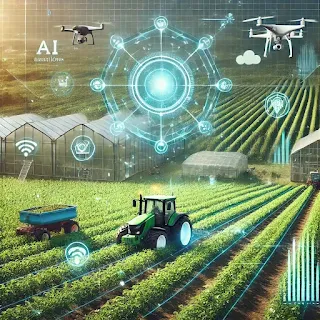
The agriculture industry is undergoing a massive transformation, thanks to Artificial Intelligence (AI). With the increasing global population and the rising demand for food production, traditional farming methods are struggling to keep up. AI-driven solutions are providing farmers with smart technologies that enhance productivity, reduce resource wastage, and ensure sustainable farming practices.
In this blog, we will explore how AI in agriculture is revolutionizing farming, improving efficiency, and shaping the future of food production.
The Role of AI in Agriculture
AI is transforming agriculture by integrating advanced technologies such as machine learning, computer vision, robotics, and predictive analytics. These innovations help farmers make better decisions, optimize resource use, and increase crop yield. Below are some key areas where AI is making a significant impact in agriculture.
1. Precision Farming
Precision farming, also known as precision agriculture, leverages AI-driven data analysis to help farmers manage crops and livestock more efficiently. AI-powered tools collect real-time data through sensors, drones, and satellites, allowing farmers to make data-driven decisions on irrigation, fertilization, and pest control.
AI-based soil analysis helps determine the right amount of nutrients needed for crops.
Smart irrigation systems optimize water usage, preventing overwatering and water wastage.
Machine learning models analyze historical data to predict weather conditions and crop performance.
2. AI-Powered Drones and Robotics
Agricultural drones equipped with AI and computer vision help farmers monitor crops, detect diseases, and assess soil health. AI-driven robotic systems are also being used for planting, harvesting, and weeding, reducing the dependency on manual labor and increasing efficiency.
Drones provide high-resolution imagery to detect crop stress, nutrient deficiencies, and pest infestations.
AI-powered robots automate the process of picking fruits and vegetables, improving harvesting efficiency.
Autonomous tractors use AI navigation to plant seeds and apply fertilizers with precision.
3. Pest and Disease Detection
One of the biggest challenges in agriculture is crop loss due to pests and diseases. AI-driven applications use image recognition and deep learning algorithms to detect early signs of infestations and plant diseases.
AI-powered tools like Plantix and Agrio analyze images of crops and diagnose diseases instantly.
Machine learning models predict pest outbreaks based on historical weather and environmental data.
Smart spraying systems target affected areas with precision, reducing pesticide usage and environmental impact.
4. Smart Irrigation and Water Management
AI in agriculture is optimizing water usage through smart irrigation systems that analyze weather forecasts, soil moisture levels, and crop water needs.
AI-driven irrigation controllers adjust water flow based on real-time conditions, reducing water wastage.
Predictive analytics help farmers anticipate droughts and take preventive measures.
AI-enabled IoT sensors monitor soil health and provide real-time insights to farmers.
5. AI-Driven Market Forecasting
AI is helping farmers make better market decisions by analyzing trends in supply and demand, weather patterns, and economic factors.
Predictive analytics provide farmers with insights on the best time to plant and harvest crops.
AI-driven platforms help farmers connect with buyers and optimize pricing strategies.
Market intelligence tools reduce the risk of overproduction and crop wastage.
Real-World Applications of AI in Agriculture
Several companies and organizations are already using AI to enhance farming efficiency. Here are some real-world examples of AI in agriculture:
John Deere’s AI Tractors: These autonomous tractors use AI-powered sensors and GPS for precision farming.
IBM Watson Decision Platform for Agriculture: This AI-driven platform provides farmers with insights on weather conditions, soil health, and crop management.
Microsoft AI for Earth Initiative: Microsoft is partnering with agricultural businesses to develop AI-powered tools for sustainable farming.
Blue River Technology’s See & Spray System: This AI-based technology detects weeds and applies herbicides only where necessary, reducing chemical usage.
AI-Powered Vertical Farming: AI optimizes lighting, temperature, and humidity in vertical farms, maximizing crop growth in limited spaces.
The Future of AI in Agriculture
The future of AI in agriculture looks promising, with continuous advancements expected in the following areas:
AI-Enabled Smart Greenhouses: AI-driven climate control systems will optimize indoor farming conditions.
Blockchain and AI Integration: Combining AI with blockchain technology will enhance supply chain transparency and traceability.
AI-Powered Soil Health Monitoring: AI will provide deeper insights into soil conditions, helping farmers improve crop rotation strategies.
Autonomous Farming Machines: More AI-driven robots and autonomous tractors will be used for large-scale farming operations.
Genetic Engineering and AI: AI-powered genetic research will lead to the development of disease-resistant and high-yielding crop varieties.
Challenges of AI Adoption in Agriculture
Despite its numerous benefits, the adoption of AI in agriculture faces several challenges:
High Initial Costs: AI-powered farming equipment and technologies require significant investment, making them less accessible for small-scale farmers.
Data Privacy Concerns: The collection and sharing of agricultural data raise concerns about privacy and data security.
Lack of Technical Expertise: Farmers need proper training and education to use AI-driven tools effectively.
Connectivity Issues: Many rural areas lack the necessary internet infrastructure for AI-powered solutions to function optimally.
Conclusion
AI is revolutionizing agriculture by making farming smarter, more efficient, and more sustainable. From precision farming and AI-powered drones to market forecasting and autonomous machines, AI is helping farmers optimize productivity and reduce costs.
As AI technology continues to evolve, its applications in agriculture will expand, leading to a more food-secure future. Governments, agribusinesses, and farmers must work together to embrace AI-driven innovations and overcome challenges to ensure global food security.
What are your thoughts on AI in agriculture? Share your views in the comments below!